Home › Parking Lot Paving & Installation
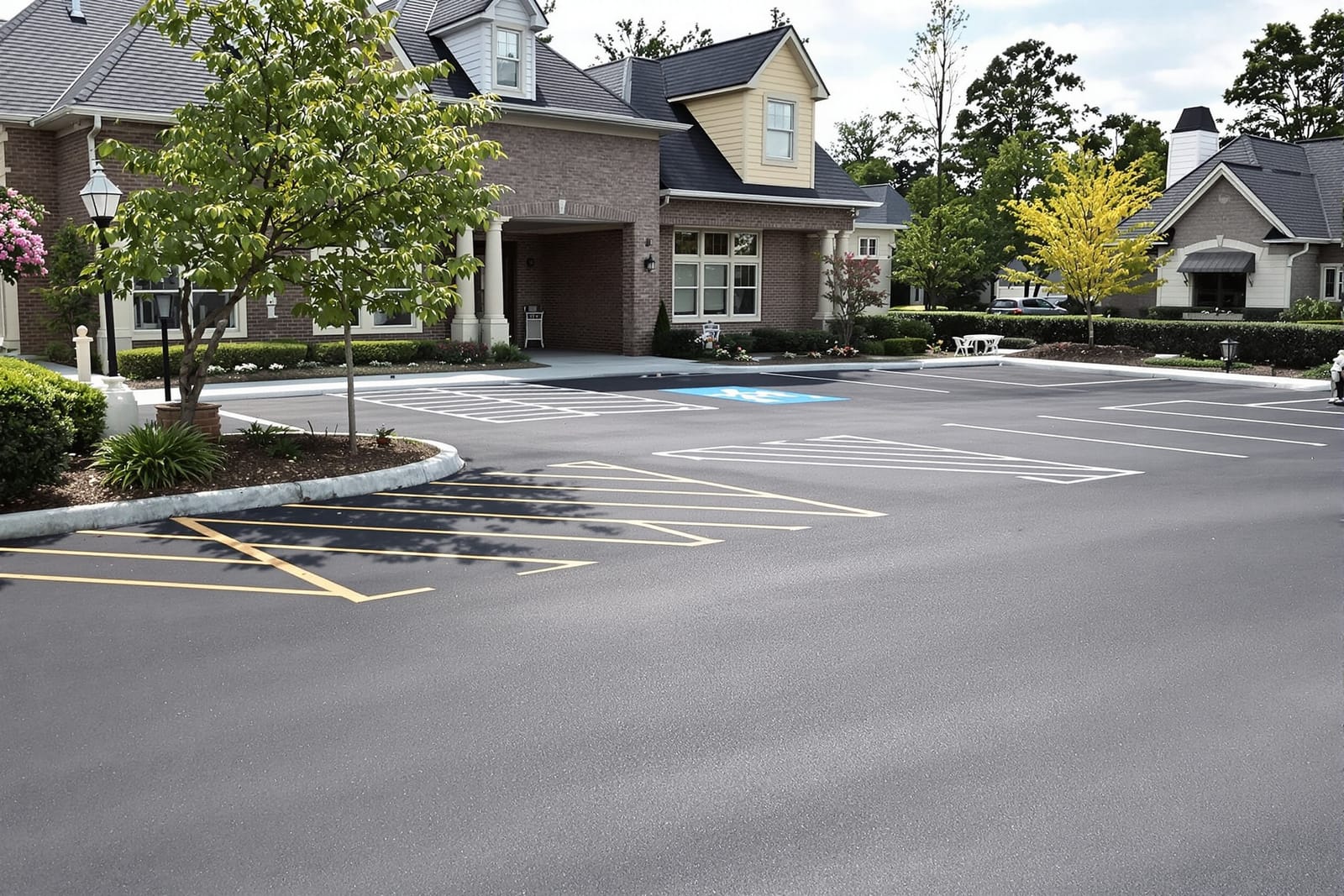
We provide complete parking lot paving in Tucson, AZ for offices, retail centers, industrial sites, and more. Our team handles layout, grading, base work, and asphalt installation to create safe, durable parking areas. From small commercial lots to large complexes, we deliver smooth traffic flow and a professional first impression.
Prestige Asphalt Tucson provides professional parking lot paving throughout Tucson, AZ and the surrounding area. Our licensed, insured crew delivers safe, clean, on-time work with a free estimate before anything begins. Call (520) 462-7505 or request your free quote.
Parking lot paving in Tucson that is built for heat and heavy use
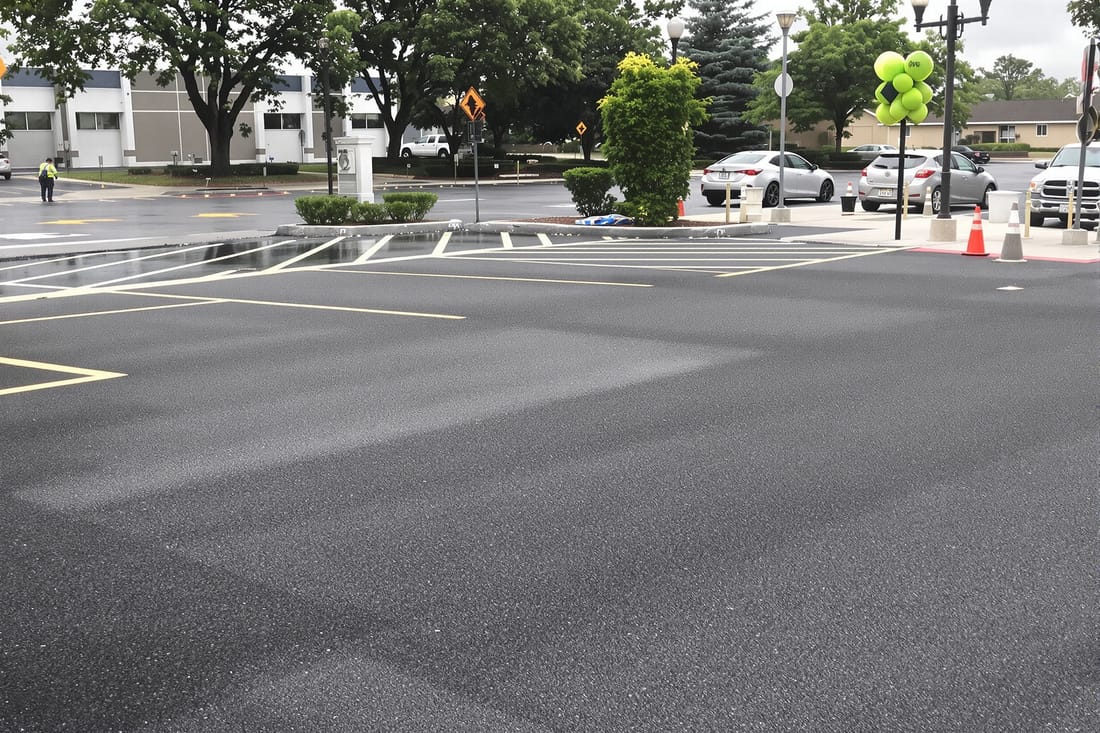
Parking lot paving in Tucson is not the same as paving in cooler, wetter cities. At Prestige Asphalt Tucson, we design and install parking lots that handle triple‑digit summers, monsoon run‑off, and daily traffic from cars, trucks, and delivery vehicles.
Most of our projects are for small to mid‑sized commercial properties, medical offices, churches, industrial yards, HOAs, and multifamily complexes built from the 1970s through the 2000s. Many of these sites have older base materials, patched concrete, or thin overlays that have reached the end of their life. Our focus is not just putting down new asphalt, but correcting what failed the first time so you get more years out of the new lot.
From the first visit, our crew looks at your traffic patterns, trash truck routes, grades, and how water currently drains during a monsoon. We measure slopes, identify soft areas, and check existing thickness where possible. This determines how we design the new parking lot paving so you are not paying for unnecessary thickness in light‑use zones or risking premature failure in drive lanes and loading areas.
Every project gets a clear, written plan that breaks down the work into base prep, asphalt paving, and striping, so you know exactly what you are buying and why.
How our parking lot installation process works, step by step
The quality of a new parking lot is mostly decided before the first ton of asphalt leaves the plant. Prestige Asphalt Tucson follows a set process that is adapted to each site, but the core steps are consistent.
1) Site evaluation and layout: We walk the property with you, review access points, and identify ADA parking needs, fire lanes, dumpster pads, and high‑turn areas. Based on this, we propose drive aisle widths, parking stall counts, and traffic flow to reduce congestion and cut down on tight turning that tears up asphalt.
2) Demolition and subgrade preparation: For full replacements, we mill or remove the old asphalt and any failed base. In Tucson, we often find caliche or sandy subgrade. Where the native soil is too loose or pumps under load, we undercut and replace it with compacted aggregate or use soil stabilization techniques. We compact in controlled lifts and check densities so the base does not shift under summer heat or after a heavy rain.
3) Base grading and drainage: Using laser‑guided equipment where needed, we shape the base to create proper slopes toward catch basins, culverts, or daylight outlets. Tucson lots need enough slope to move water, but not so much that it rushes into neighboring properties. We pay extra attention at transitions to sidewalks and building entrances to control ponding and trip hazards.
4) Asphalt placement and compaction: We match mix type and thickness to use. For lighter commercial parking we typically install 2.5 to 3 inches of hot mix asphalt in one or two lifts. For drive lanes, entrances from city streets, or dumpster routes, we increase thickness or use a stronger mix. Asphalt is laid with a paver for even mat thickness, then compacted quickly with steel and pneumatic rollers so joints are tight and air voids are minimized.
5) Joints, edges, and tie‑ins: Weak edges and cold joints are common failure points in Tucson lots. We pay close attention where new paving meets existing concrete, approaches, or city streets. Edges are compacted and backed with base material, and longitudinal joints are kept hot and properly overlapped to avoid early cracking.
6) Curing, striping, and signage: After compaction, the lot is allowed to cool and firm up before opening to traffic. Then we lay out stalls, ADA spaces, directional arrows, and fire lanes according to current codes and your use needs, and install wheel stops or signage as specified.
Material and design choices for a Tucson parking lot
Not every parking lot paving job should be built the same way. In the Tucson climate, certain choices extend life and reduce maintenance costs.
Asphalt mix: For most commercial lots we use a dense graded hot mix that balances smoothness with durability. Near busy intersections or where trucks turn tightly, we may recommend a slightly stiffer mix to resist shoving and rutting during high heat. If your property is near industrial operations with potential fuel or oil spills, we discuss options for surface treatments and more frequent sealing to protect the mat.
Thickness and section design: Parking stalls for passenger vehicles can often use a thinner section than drive aisles and dumpster or delivery lanes. Prestige Asphalt Tucson commonly designs lots with variable thickness so you are not overspending on low‑load areas. At the same time, we reinforce approaches, drive‑through lanes, and loading areas so they stand up to daily abuse.
Drainage features: Older Tucson lots often have minimal drainage, which leads to standing water and rapid surface damage. When we design new paving, we look at whether we can correct drainage using slope alone, or if we need additional catch basins, valley gutters, or swales. We also evaluate how your lot interacts with city storm drains and neighboring properties to avoid creating new problems.
Curbs and concrete elements: In some projects, it makes sense to combine asphalt paving with concrete dumpster pads, valley gutters, or rolled curbing. Concrete pads at dumpster locations keep heavy trucks from deforming the asphalt. Gutters along building fronts can capture roof runoff that would otherwise beat up the pavement. We can include these items in the initial design so they are integrated, not patched in later.
What affects the cost of parking lot paving in Tucson
Customers often ask why two similar sized lots can have very different pricing. The answer is usually below the surface. Prestige Asphalt Tucson walks you through the real cost drivers so you can make informed decisions.
Existing condition: If your current lot only needs milling and an overlay, costs are lower than a complete tear out and rebuild. However, if we find widespread base failure, pumping, or large alligator‑cracked areas, a simple overlay will not last. In those cases, we explain what must be rebuilt and what can be preserved so you are not paying for unnecessary demolition.
Subgrade and base work: Tucson soils vary within a single block. A site with firm native material and adequate existing base will cost less than one with expansive clay, saturated zones near landscaping, or poorly compacted fill. If test cuts or proof rolling show weak areas, we price in the necessary undercutting and replacement so the lot does not fail early.
Thickness and traffic: A small office with mostly passenger cars can often use a lighter section than a distribution facility with daily semi traffic. We factor in vehicle types, counts, and turning areas when recommending asphalt thickness. You can see the breakdown between parking stalls, drive aisles, and heavy use zones in the proposal.
Phasing and access: Keeping your business open during construction can impact cost. Night work, weekend work, or tight phasing to maintain access takes more time and labor, but sometimes this is the best choice for busy plazas or medical facilities. We discuss these options clearly so you can weigh operational disruption against project cost.
Scope details: Line striping, ADA improvements, concrete repairs, wheel stops, bollards, and signage all affect pricing. Instead of bundling everything into one vague number, we itemize these so you can prioritize and stage work over multiple years if needed.
Common Tucson parking lot issues and how we address them
Local conditions in Tucson create a predictable set of parking lot failures. Understanding them helps you know what to ask any paving contractor before you hire.
Heat‑induced cracking: High surface temperatures cause asphalt to oxidize and become brittle. Without timely sealcoating and crack filling, small surface cracks spread and connect into larger problem areas. When paving new lots, Prestige Asphalt Tucson focuses on proper compaction and joint construction so early cracking is minimized. We then recommend a maintenance schedule tailored to your use and exposure.
Poor drainage and ponding: Monsoon storms reveal weak spots in parking lots. Standing water accelerates stripping and raveling of the surface. Before we pave, we identify existing ponds and design slopes to move water away. On new installations we consider where downspouts discharge, how water crosses sidewalks, and whether additional inlets make sense.
Edge failure and raveling: Many older Tucson lots have crumbling edges along landscaping or unconfined sides. This usually happens where asphalt was placed thin or without proper base support. In new construction we compact base fully under and beyond the asphalt edge and, where appropriate, recommend curbing or concrete bands to protect high‑risk edges.
Oil and fuel damage: In front of restaurants, service bays, and loading zones, leaking oil and fuel soften asphalt binders. We can specify more frequent sealcoating, localized use of more resistant mixes, or small concrete pads in the highest exposure spots to reduce this issue.
Tree root upheaval: Mature desert trees and poorly placed irrigation lines can lift or undermine pavement. On new lots we work with your landscaper or property manager to plan tree placement and root barriers so the paving and landscaping work together instead of fighting each other.
What to expect when you hire Prestige Asphalt Tucson
We understand that shutting down parking spaces impacts your business or tenants, so we plan the work to keep disruptions as short and predictable as possible.
Scheduling and phasing: Before the job starts, we meet with you to set clear working hours, phasing, and traffic control. For busy complexes we often divide the lot into sections, keep signed pedestrian paths open, and schedule critical phases like tie‑ins and striping during lower traffic periods.
Communication: You get a single point of contact who explains daily activities, change orders, and weather delays. In Tucson, high temperatures, sudden monsoon storms, and asphalt plant schedules can affect timing, so we build contingencies into the plan and keep you updated.
Code and ADA compliance: For new parking lot paving and major reconstructions, we review current ADA parking stall counts, access aisle dimensions, slopes at accessible spaces, and routes to building entrances. We coordinate striping, signage, and ramp details so you are not left with compliance issues after paving is done.
Turnaround and re‑opening: Most small to mid‑sized lots can be paved and striped in 1 to 3 days, depending on size and phasing. We let you know exactly when different sections can reopen to light traffic, heavy traffic, and delivery trucks, and we provide guidance on early use so the surface is not damaged before it has fully cooled and stabilized.
If you are planning new parking lot paving, a full replacement, or a multi‑year improvement plan for an aging Tucson property, Prestige Asphalt Tucson can walk you through design, pricing, and scheduling so the finished lot fits how your site is actually used.